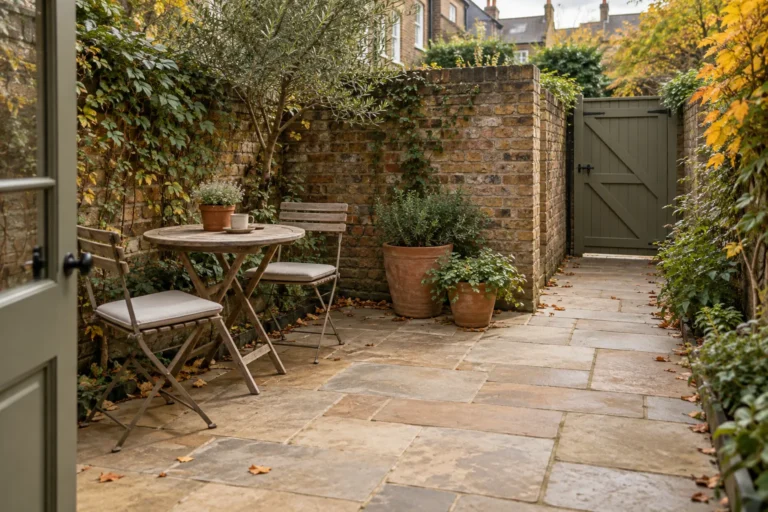
A shady patio can feel composed and inviting without a summer-long display of flowers. Broad leaves beside finer foliage, a silver highlight against a dark wall and a few well-placed pots can give a small courtyard its own character. The useful question is which plants suit the shade you actually have.
Start with the growing conditions, then choose the containers. A beautiful pot beside the back door is only a success if you can still open that door, reach the plant to water it and sit down without brushing past wet leaves.
Read the patio before choosing plants
Look at the space at different times of day. A courtyard with morning sun and afternoon shade is different from a narrow passage that receives very little direct light. Nearby buildings, fences and overhanging trees can also create different conditions within the same patio.
Make a simple note for each possible pot position: light, shelter, exposure to rain and distance from a watering point. Do not assume that a shady corner stays damp. A container tucked beneath an overhang may receive little rain even during a wet week.
Next mark the space that must remain clear. Our guide to small patio layouts starts with circulation and seating; use that plan to decide where planting belongs rather than filling every spare patch of paving.
Choose one plant for shape and another for contrast
Instead of buying a different plant for every pot, imagine a small group with three roles: a generous leaf shape, a lighter highlight and a darker accent. This is a design approach, not a requirement to combine those plants in the same compost. Separate containers let you adjust their positions and care individually.
Hostas for broad leaves
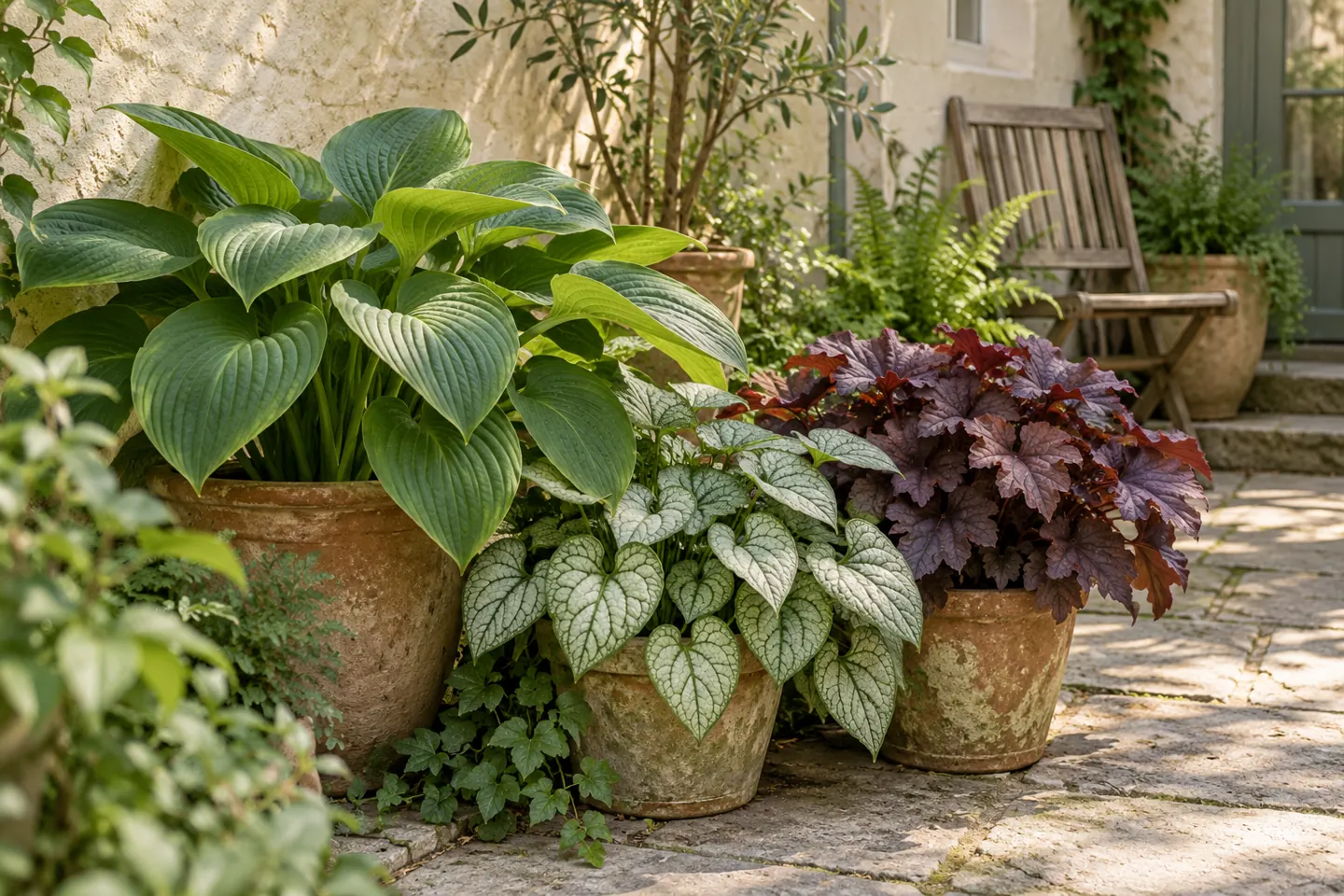
Hostas bring a substantial leaf shape to a small arrangement. The RHS hosta growing guide recommends moist conditions in light to medium shade for most varieties and identifies miniature types, including ‘Blue Mouse Ears’, as useful for containers. Choose a cultivar whose eventual size suits the available space.
Think about how the leaves will look from your chair, not just from above at the garden centre. A broad-leaved plant can make one corner feel settled, while several large specimens along a narrow route may feel crowded.
Brunnera for a silver highlight
Brunnera macrophylla ‘Jack Frost’ offers silvered, heart-shaped foliage. The RHS selection of perennials for containers includes it as a plant for shade, with small blue spring flowers. It also warns that drought combined with excessive sun can scorch the leaves.
Visually, the pale foliage is useful where a dark fence or wall makes green leaves disappear. Try it as one deliberate highlight rather than repeating pale plants around every edge.
Heuchera and ajuga for darker notes
The same RHS selection includes Heuchera ‘Purple Petticoats’ for moist but well-drained conditions in sun or partial shade, and shade-loving Ajuga reptans ‘Catlin’s Giant’. The ajuga can trail over a pot and root where stems reach the ground, so keep an eye on its spread.
A bronze or purple note can connect planting with weathered terracotta, brick or timber. If your patio is deeply shaded, check the requirements of the particular heuchera before buying; a label saying partial shade is not a promise that every dark corner will suit it.
Use the pots to organise the view
For an imagined compact courtyard, place a larger hosta container near the seated view, a silver-leaved brunnera slightly behind it and a lower dark accent nearer the front. Leave a visible strip of paving between the group and the route through the garden. Adjust the arrangement to the mature spread shown on the plant labels.
Repeat a pot material or colour to hold the group together. Different heights can add depth without needing more varieties. Before planting, move the empty containers around and check the arrangement with the chairs pulled out and the door fully open.
Plan for watering, drainage and winter
Choose containers with drainage holes and compost appropriate to each plant. For hostas, the RHS advises suitable peat-free potting compost and regular watering while the plants are in leaf. Check the compost rather than watering automatically because the calendar says so.
Containers do not make hostas immune to slugs and snails. Inspect leaves and pot edges as part of your normal care. Hostas also lose their foliage in autumn: allow for that seasonal gap instead of expecting the leafy summer arrangement to look identical in January.
Keep the scheme small enough to manage. Three well-positioned containers, with room to grow and easy access for care, can do more for a shady patio than a long row of pots competing for light and attention.
Further Reading