Two renovation quotes can describe the same room and still price very different jobs. One may include removing the old floor, preparing the surface and disposing of the waste. Another may cover only fitting the new finish. Comparing the totals before comparing the work can leave you with a misleading shortlist.
The aim is to understand what each builder has allowed for, what remains undecided and what you would need to organise yourself. A clear comparison also helps you see where changing the design would make the project simpler.
Give everyone the same version of the brief
Write a short description of the room, the work you want done and the finishes you have already chosen. Add measurements, photographs and relevant drawings. Label the document with a date so a later change does not leave one builder pricing an older version.
Separate decisions from preferences. “Keep the existing door” is a decision; “we might prefer an oak door” is still an option. If you are unsure about the sequence, work through our guide to room renovation order before asking for a final price.
A practical interior moodboard can communicate the intended finish, but add product names or specifications where they matter. A photograph of pale timber does not tell a contractor which flooring to include.
Check what sort of price you have received
MoneyHelper’s home-improvement guidance distinguishes a quotation, an agreed fixed price, from an estimate, an approximate figure that may change. It recommends obtaining at least three quotes and comparing them in detail.
Ask each contractor to identify the scope covered by their figure and any conditions attached. A fixed price for a limited list of work does not include every improvement you might later decide to add. Record how long the offer remains valid and which selections still need confirming.
Build a comparison around the work
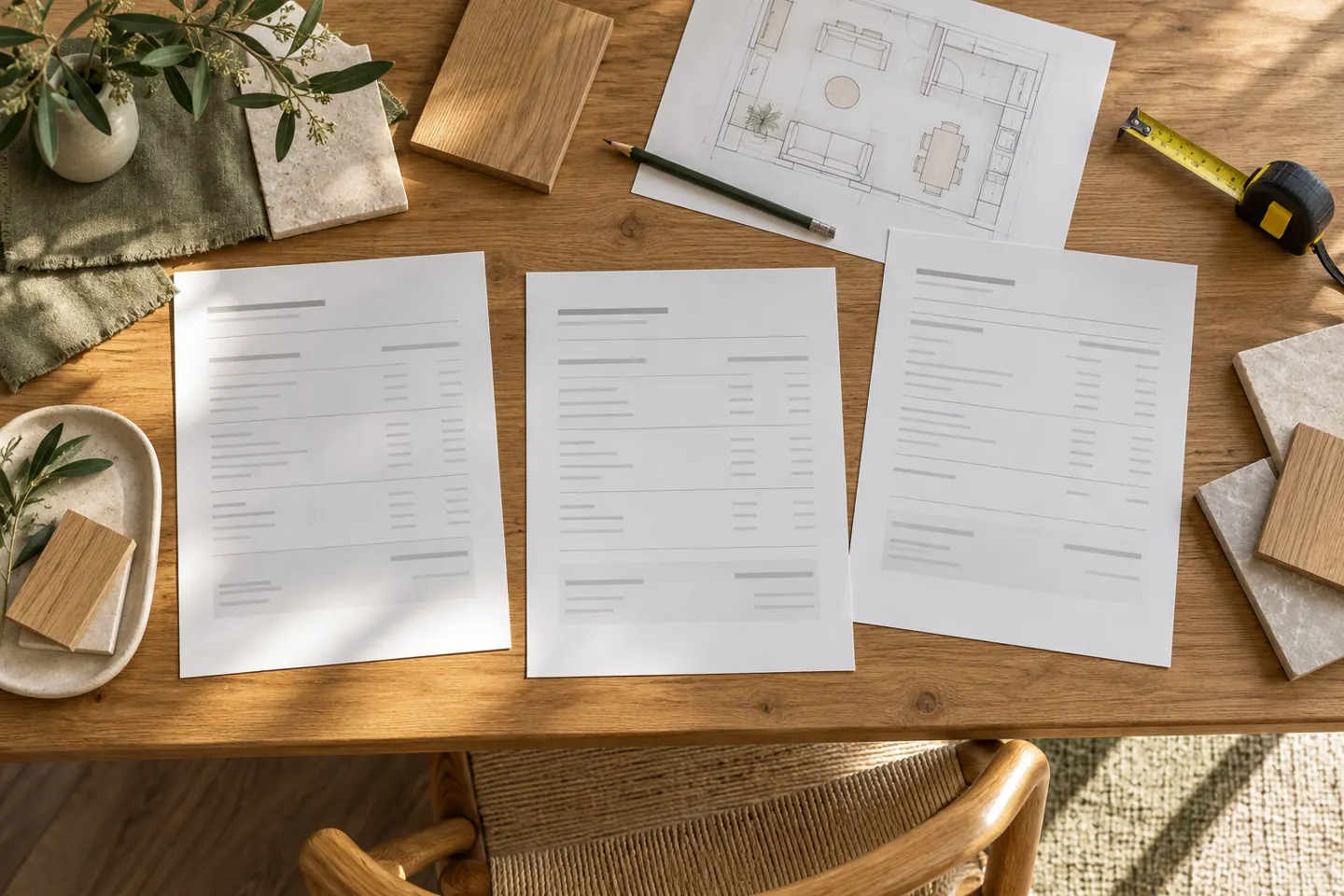
Make a page with one column for each quote and a row for each part of the project. Write “included”, “excluded” or “to confirm” before adding any figures. An unexplained blank should become a question, not an assumption.
- Preparation: protection of retained furniture and finishes, removal of existing materials and preparation of the surfaces beneath.
- Materials: the specified product, quantity or area, finish and responsibility for ordering and delivery.
- Installation: the actual work, associated trades and finishing around edges, openings and adjoining surfaces.
- Completion: waste removal, cleaning, making good and the process for checking unfinished details.
- Price presentation: whether applicable VAT and any identified allowances are included in the displayed total.
For example, imagine replacing a living-room floor. Quote A includes lifting the carpet and removing the skirting; quote B assumes the room will be empty with the old flooring already removed. Those offers cannot be compared fairly until the missing preparation is priced or you consciously take responsibility for it. This is an illustrative comparison, not a guide to what a particular job should cost.
Turn allowances into specific questions
Mark every allowance and provisional item. Ask what it covers, what assumption was used and what would make the amount change. If a flooring allowance is based on a different product from your chosen sample, ask for a revised figure using the actual specification.
Keep a separate list of items you will buy. This might include handles, decorative lights or paint, depending on the agreement. Include their delivery arrangements in the conversation: a contractor cannot fit a product that has not arrived, and storing it in the room may obstruct other work.
Compare how the project will run
A useful quote discussion covers the daily experience as well as the finished photograph. Ask who your contact will be, who is expected on site and how the work affects access to the room. Explain if you work from home or need a route kept clear.
The Federation of Master Builders’ checklist recommends checking relevant experience, references, insurance and claimed memberships, alongside itemised written quotes. It also stresses a written contract, timescale and payment schedule. A membership badge alone should not replace your own checks.
Agree the change process before work starts
Suppose you choose a different floor after the work is booked. Ask how the new material, any extra preparation and the effect on timing will be recorded. MoneyHelper advises getting additional work and its costed schedule in writing before agreeing to spend more.
Keep the accepted brief, quote and subsequent changes together. When comparing the final shortlist, look for a complete, understandable offer and evidence that the contractor can deliver the work. A lower total is useful only when you know which job that total buys.