A small patio feels more generous when it has a clear purpose. Trying to fit a dining set, a deep sofa, a barbecue and a collection of large pots into the same corner usually leaves little space for the people who are meant to enjoy it.
Start with the activity you would actually use the space for: coffee before work, supper for two or somewhere to sit among plants. A good layout makes that activity easy and keeps a sensible route between the house and garden.
Draw the patio before choosing furniture
Measure the usable paving and mark doors, steps, gates, drains and anything fixed. Include the direction in which doors open. A rectangle drawn from memory can hide the awkward corner that makes a furniture set difficult to use.
The RHS guide to creating a garden plan recommends recording the space and its existing features before developing a design. Add your own observations about sun, shade and the view from indoors. A seat in the brightest part of the photograph may be uncomfortable when you actually want to use it.
Keep separate measurements for the furniture itself and the space needed to use it. Chairs move backwards; someone needs to get around the table; a gate still needs to open. Mark the proposed arrangement temporarily with string or empty boxes and walk through it.
Layout one: a table tucked to one side
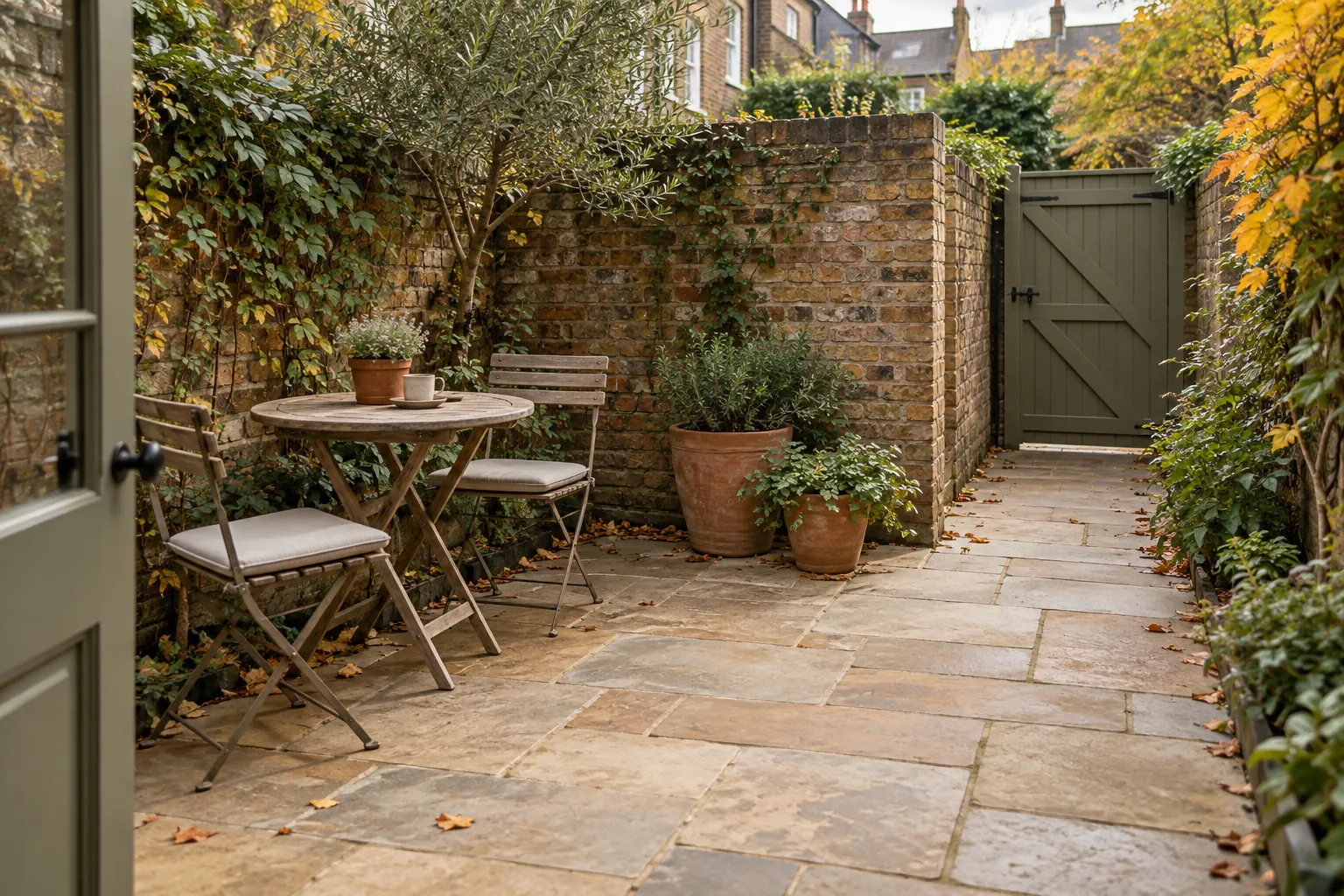
For a patio used mainly for meals, let a compact table be the main piece. Place it towards one edge rather than automatically in the middle. This can preserve a direct route from the door to the garden without asking everyone to squeeze between chair backs.
A round table can soften a tight corner, while a narrow rectangular one may sit more neatly along a wall. Neither shape is automatically better: test the position with the chairs pulled out, not pushed neatly underneath.
For example, a two-person household might choose two comfortable everyday chairs and keep folding seats indoors for occasional visitors. That creates a different space from permanently arranging four large armchairs around a table. Our garden furniture ideas offer a starting point for choosing the character of the pieces once the layout works.
Layout two: a bench with a clear centre
If you mostly read or chat outdoors, a bench along a sound boundary can leave the centre open. Pair it with a small movable table rather than a second large seat. A bench with a back is a different proposition from a narrow ledge: try the comfort before planning long evenings around it.
Check what is behind and above the seat. A dripping gutter, an outward-opening window or a thorny plant can make an otherwise attractive position impractical. Keep access to inspection covers and drainage points.
Storage benches also need room for their lids or doors to open. Treat storage as a function to test, rather than an extra benefit assumed from a product photograph.
Layout three: a flexible open space
Where the patio doubles as a route, play area or working space, removable furniture may be more useful than a permanent arrangement. A folding table and stackable chairs allow the same paving to serve different purposes.
The RHS budget-friendly garden design guide includes flexible seating ideas. Before buying, decide where folded furniture will actually live. A set that only fits in the passageway when packed away has moved the problem elsewhere.
Give planting a defined footprint
Group containers deliberately instead of distributing one into every available gap. One planted corner can frame a seat while leaving the route readable. Choose pots you can maintain and plants suited to the light, exposure and available root space.
Vertical planting can add interest without occupying the whole floor, but supports and fixings must suit the boundary. Pots still need drainage and access for watering. The RHS advice on planting small spaces is useful when choosing what will thrive.
Test the ordinary day, not the perfect photograph
Before committing, carry a tray through the proposed route, open every door and sit in each position. Think about storing cushions, sweeping leaves and moving a watering can. Keep furniture and containers clear of exits and steps.
If the paving, levels or boundaries need work, settle those issues before furnishing; our guide to renovating an outdoor garden space looks at the wider project. For a small patio, the best result is often a modest arrangement with enough room left to enjoy it.