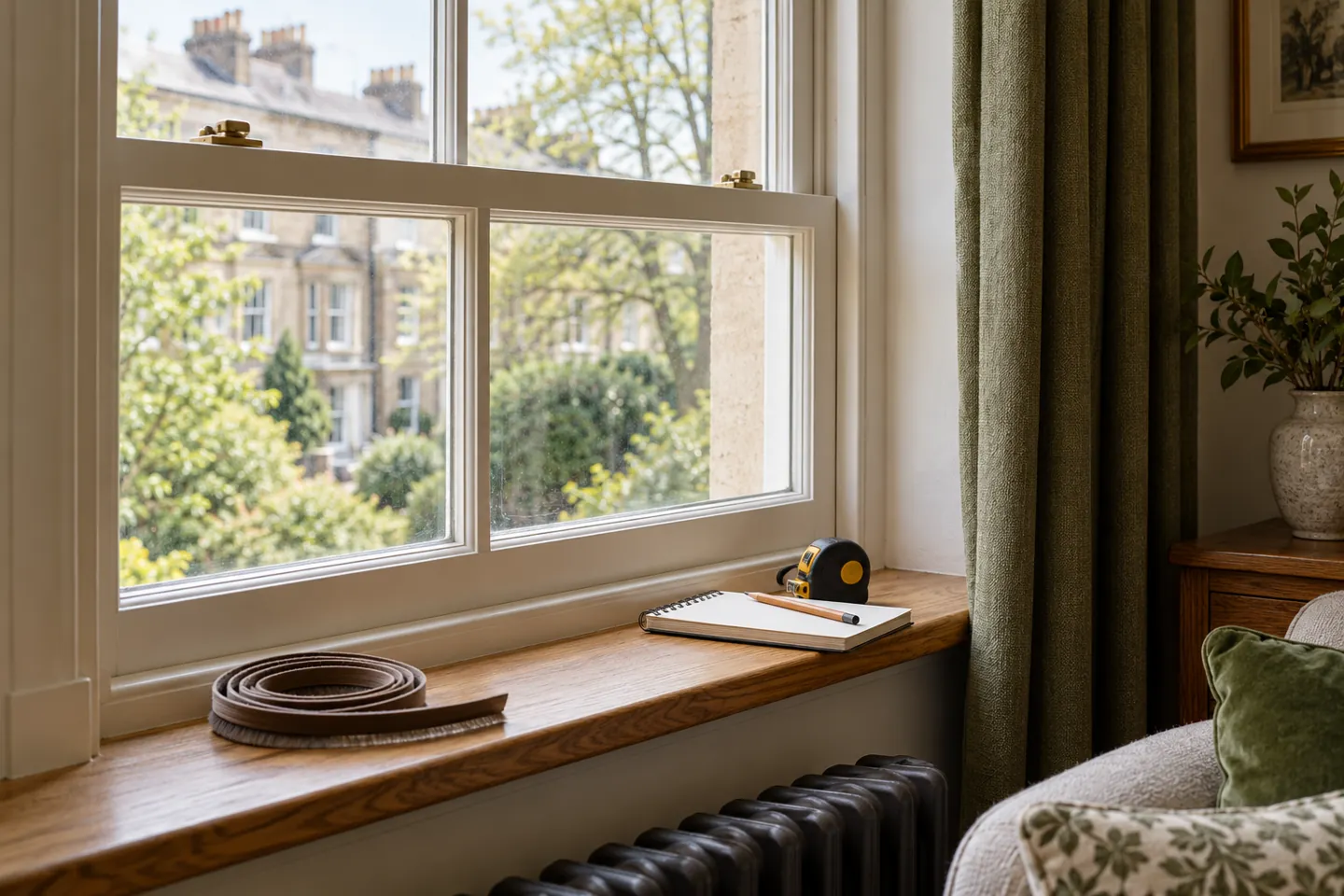
Fresh paint and new curtains can make a room look warmer while leaving the same cold draught around the window. Before decorating, spend time understanding where unwanted air enters and whether the frame or door needs repair. It is easier to plan that work before the final finish goes on.
Draught-proofing before decorating is a useful planning step, but the aim is not to seal every opening. Homes also need deliberate ventilation. Identify the difference before buying a roll of sealing strip or asking a decorator to fill gaps.
Separate unwanted draughts from ventilation
Energy Saving Trust’s draught-proofing guidance distinguishes uncontrolled gaps from necessary airflow. It identifies extractor fans, airbricks, wall vents and trickle vents as openings that should not simply be blocked. Ventilation serving combustion appliances needs particular care.
Make two lists as you look around the room: features designed to provide air, and suspected unwanted gaps. If you cannot tell which is which, leave the opening alone and get advice. Do not cover a grille because it interrupts a planned colour scheme or a furniture arrangement.
Also note any existing condensation, damp or mould. Draught-proofing is not a diagnosis or cure for those problems. Discuss the cause and ventilation needs with a suitable professional before reducing airflow further.
Inspect the room before ordering finishes
On a breezy day, look and listen around the windows and external doors. Record where you notice moving air, rattling or visible gaps. Energy Saving Trust suggests these observations as ways to locate draughts. Avoid testing with a flame or dismantling fittings to investigate.
Photograph each concern and label it by position: the lower corner of the opening sash, the side of the door or the joint between a frame and wall. A description such as “the window is cold” is less useful to a tradesperson than a photograph of the actual area.
Check whether existing seals appear loose, damaged or painted over. A modern window may already have a sealing system, so adding another strip without understanding it may be unhelpful. Ask the manufacturer or installer about the correct replacement parts.
Decide whether repair comes first
A draught and a repair problem can occur in the same place. If a window does not close properly, a door catches badly or timber appears deteriorated, have the underlying condition assessed. An extra layer of material should not be used to force an unsuitable fit.
For older homes, Historic England’s guidance discusses draught-proofing as a way to improve comfort while retaining original windows and doors. It describes different seals and the potential of discreet secondary glazing. The appropriate approach depends on the building and its details.
If original joinery contributes to the character of your home, include its appearance in the brief. Ask where a seal would sit, what would be visible and how the work relates to repair and repainting. For listed buildings or other protected features, check consent requirements before making changes.
Put the work in the right order
Before booking a decorator, agree which repairs and draught-proofing measures are proposed and who will do them. Ask the installer and paint manufacturer how preparation, curing time and seal installation should be coordinated. The sequence can differ between products and joinery systems.
Our guide to planning a room renovation helps place this work alongside flooring, electrics and decorating. The useful principle is to resolve work that could disturb the finish before treating the room as ready for its final coat.
Keep a short scope for each window or door. Include the retained features, agreed repair, proposed sealing system and decorating responsibility. That makes it easier to compare offers and spot whether one contractor assumes another will make good afterwards.
Keep curtains and furniture in the plan
A room’s comfort also depends on how you arrange it. Check the relationship between a window, its curtains and nearby heating. Our curtain and radiator guide looks at those layout choices; curtains should not be used to hide a repair or ventilation problem.
Consider a sitting area close to an external door. If the door opens directly into the room, discuss the source of discomfort before buying thicker furnishings. The answer may involve an appropriate repair or adjustment, rather than changing the entire decorative scheme.
Check operation and airflow afterwards
Once the agreed work is complete, check that windows and doors still open, close and lock normally. Keep necessary ventilation accessible. Energy Saving Trust’s home ventilation guide explains why improvements that make a home more airtight must be considered alongside fresh-air provision.
Keep the installer’s care instructions with the decorating records. If a seal loosens, a frame becomes difficult to operate or condensation becomes persistent, seek advice instead of adding more material. A successful finish leaves the room looking considered, working properly and comfortable to use.