An interior design moodboard is most useful when it helps you choose what belongs in a room. A collection of beautiful photographs can establish a feeling, but it will not necessarily tell you whether a new rug works with the floor you already have.
Build the board around your real room, then use it to edit your choices. You can work on paper, in a folder or digitally. The value comes from the decisions it records, rather than the sophistication of the layout.
Begin with what is staying
Photograph the room in ordinary daylight and list the elements you will keep. Include flooring, a fireplace, large furniture, curtains and anything else that has a strong visual presence. Add a sample or clear photograph of each to the board.
This prevents an inspiration scheme quietly becoming a plan for a different house. If your floor has a warm orange tone, an all-grey reference room may be less useful than a room that shows how warmer materials can work together.
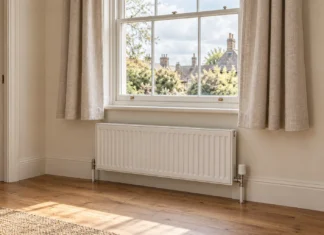
Record practical constraints alongside the pictures: a sofa that must fit through a narrow door, a radiator beneath a window or a surface that needs to withstand daily use. These are design inputs, rather than inconveniences to deal with later.
Choose one anchor image
Select a single image that captures the quality you want most. It might show a relaxed arrangement, a restrained palette or the relationship between wood and textiles. Write one sentence explaining what you like about it.
“Quiet, warm and practical, with a few darker details” is more useful than saving twenty unrelated rooms. It gives you a test for later decisions without requiring you to reproduce every item in the photograph.
Look beyond the objects. Notice how much empty space there is, the contrast between light and dark, and whether the room feels formal or relaxed. Those relationships may be achievable with furniture you already own.
Build a small material palette
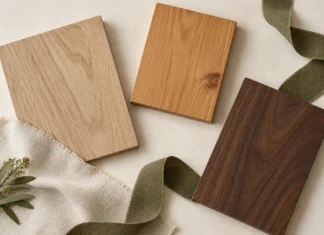
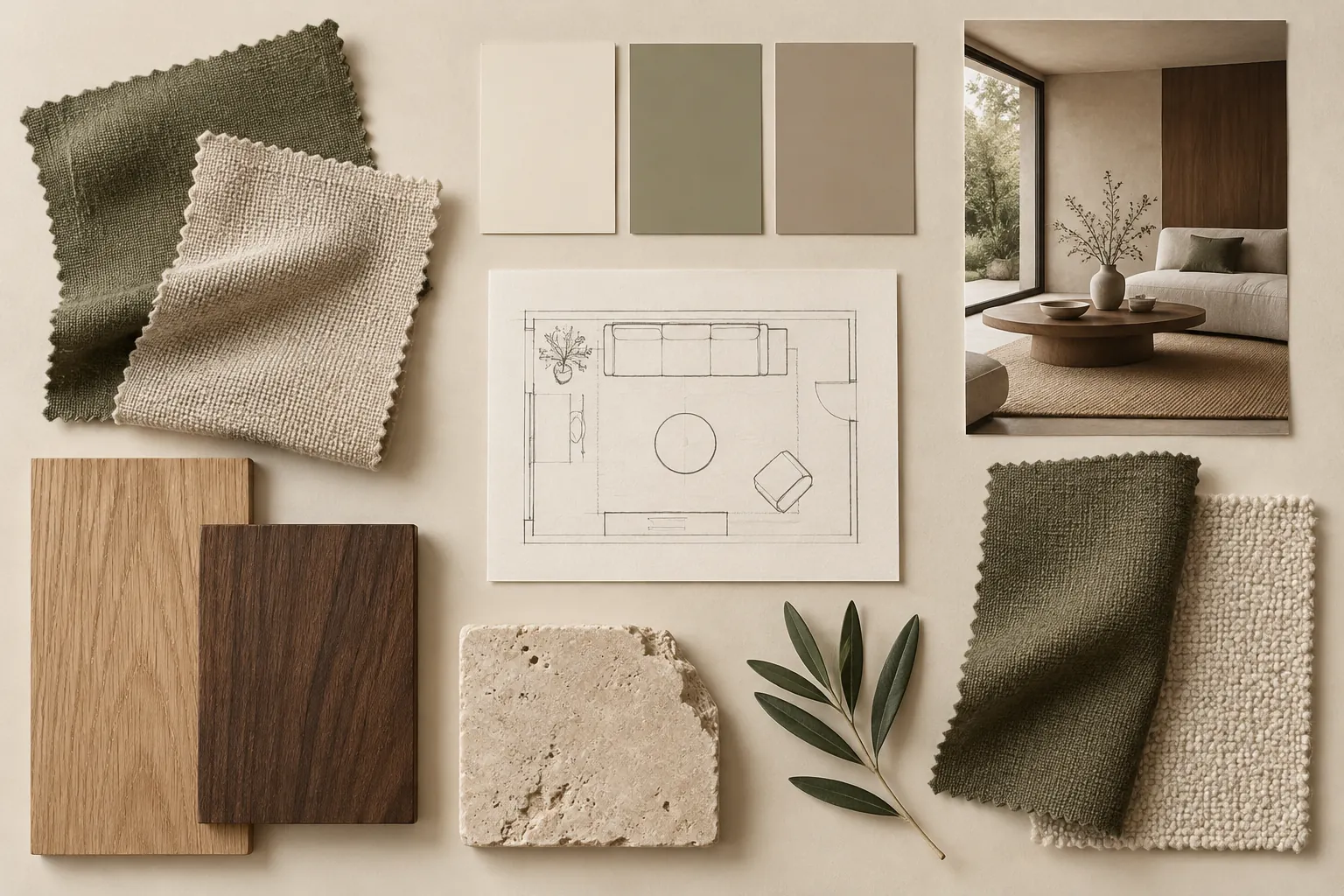
Add the largest proposed surfaces first: wall colour, flooring if it is changing, and the main upholstery. Then introduce a smaller selection of materials for curtains, a rug and accent pieces.
Show those materials in roughly meaningful proportions. A tiny paint chip beside a huge picture of a cushion can make the cushion seem more influential than the walls. The board does not need mathematical accuracy, but it should make the dominant choices obvious.
If several woods are involved, compare their undertones and finishes. They do not need to match exactly. Our guide to mixing wood tones offers ways to create a relationship between existing and new pieces.
Bring real samples into the room
Screen images are useful for narrowing a search, but colour and texture can look different in person. Request actual samples where available and compare them together in the room.
Dulux’s colour-scheme guidance recommends working with samples and testing colours in different light. Check your selection during the day and under the lamps you normally use in the evening. Move samples between relevant walls instead of judging them only beside a bright window.
For a room with cooler daylight, our guide to choosing warm neutrals for north-facing living rooms provides a useful starting point. Treat suggested colour families as possibilities to test, rather than guaranteed results.
Separate the look from the layout
A moodboard does not prove that furniture fits. Keep a measured plan alongside it, with door swings and clear routes marked. Add the dimensions of prospective large pieces before deciding that they belong in the scheme.
For example, a generous armchair may suit the mood perfectly but block the route to the window. You might need a smaller chair with the same material character. Preserve the intention and adjust the object.
Our Scandinavian living room ideas for small UK homes show how restraint and proportion can matter as much as a particular style of furniture.
Turn the board into a buying checklist
For each shortlisted item, record its exact reference, dimensions, finish and source. Note whether you have seen a sample and whether availability or delivery still needs checking. Keep alternatives separate so they do not accidentally become part of the same scheme.
Before adding something new, ask three questions: does it work with what stays, does it support the intended feeling and does it solve a need? An attractive object can fail all three.
Leave a little room for the scheme to evolve. A moodboard should make decisions clearer, rather than force every accessory into a fixed shopping list. Once the major materials and proportions work together, you can add the personal pieces that make the room yours.