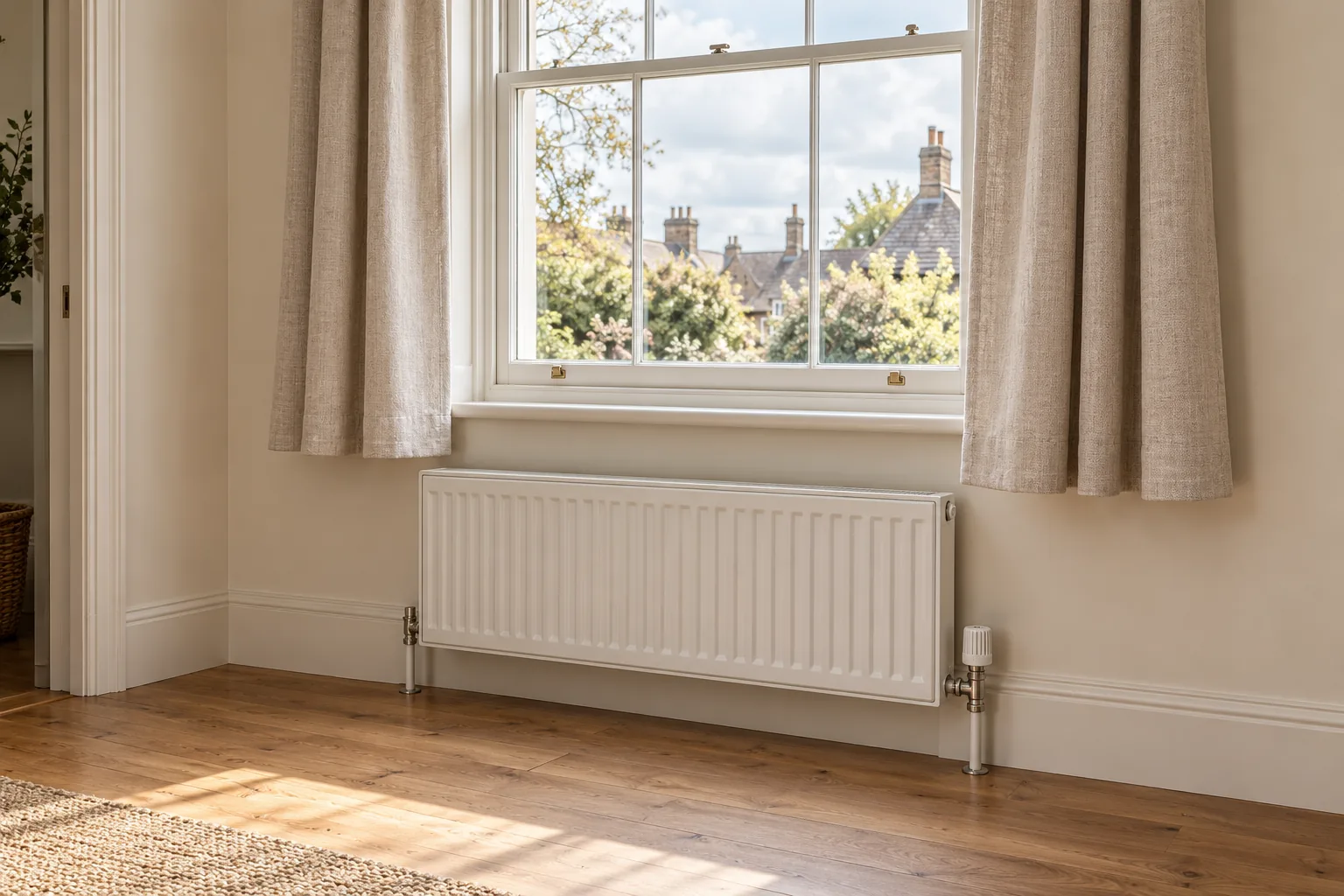
A radiator beneath the window creates a familiar decorating dilemma. Floor-length curtains may suit the room’s proportions, but closing them across the radiator can put a layer of fabric between the heat source and the space you want to warm.
The most useful solution depends on how the window is used. You might choose curtains that finish above the radiator, a blind that provides privacy within the window, or full-length side panels that remain clear of the heater. Decide what needs to move each evening before ordering fabric.
Look at the whole window wall
Record the window recess, sill depth, radiator height and projection, valve positions and the wall space at either side. Note anything else competing for the same area, such as a sofa arm, bed or built-in cabinet.
Check how the window opens and where the curtains would sit when fully gathered. A deep sill does not automatically keep hanging fabric clear of a radiator; the pole’s projection and the folds of the curtain also matter.
If the heater is electric or has particular clearance requirements, use its instructions to determine what is allowed. The examples here concern window treatments around a conventional radiator; they do not establish safe distances for every type of heating appliance.
If the room also receives cool daylight, our north-facing living room colour guide explains how to judge fabric and paint samples together.
Option one: curtains that stop above the radiator
Shorter curtains can be the simplest answer when the radiator spans most of the window wall. They can close for privacy without hanging over the front of the heater. A clean, deliberate hemline helps them look chosen rather than accidentally too short.
Measure from the correct hanging point to the proposed hem, then check the whole width of the radiator. Floors, poles and windows are not always level, so take more than one measurement. Leave the valves accessible and account for the way fabric falls when gathered.
Dunelm’s measuring guide suggests a curtain hem 3cm above a radiator. That is the retailer’s guidance, not a universal appliance clearance. Follow any more specific requirements for your radiator, fabric and installation.
Option two: a blind for privacy, curtains for framing
A blind can provide the working privacy layer while longer curtains frame the window at either side. When the radiator is running, the side panels can remain open and clear of it.
This works only if you have enough wall and pole width for the fabric to stack outside the radiator’s footprint. Heavy curtains can occupy a surprising amount of space. Check the gathered width with the supplier rather than assuming that a narrow strip of wall will be enough.
Consider the view when the blind is down. A simple fabric in a related tone can look calmer than several competing patterns. If darkness matters for sleeping, check the complete blind specification and likely light gaps instead of assuming that any lined product will provide blackout.
Option three: full-length curtains on a different wall arrangement
In a larger project, relocating a radiator may allow the window treatment you want. That decision needs a heating assessment and professional advice, not just a drawing that looks tidier. The new position must suit the room’s heating needs and the existing system.
Do not move the visual problem to a different corner by placing the relocated radiator behind a sofa or cabinet. Plan heating, furniture and curtains together. If relocation is impractical, a well-proportioned blind and shorter curtain can still make an elegant window.
Measure the heading correctly
The finished drop depends on the curtain heading. Pencil pleats hanging from rings and eyelets threaded over a pole do not start at the same point. John Lewis’s curtain guide explains these different measuring positions. Follow the instructions for the actual curtain service you are using.
Measure the fitted pole or track, excluding decorative finials where the supplier instructs you to do so. Do not calculate curtain width from the glass alone. The curtain needs to cover the working width with the fullness required by its heading and fabric.
Be especially careful with ready-made pairs: check whether the advertised width refers to each panel or the pair. If you are between standard drops, compare the cost and finish of professional alteration with a made-to-measure option before buying.
A worked example to take to the curtain maker
Suppose the supplier’s specified hanging point is 240cm above the floor and the radiator top is 65cm above the floor. You and the supplier choose a hem at 70cm, subject to the heater’s requirements. The illustrative finished drop is 240 − 70 = 170cm.
That 5cm gap is a choice in this example, not a recommended clearance for every home. The point is to subtract the desired hem height from the correct hanging-point height. An eyelet heading or a sloping floor can change the order dimensions, so have the supplier confirm them.
Keep warmth and decoration working together
Energy Saving Trust advises keeping curtains from blocking radiators. Avoid solving the appearance of a window at the expense of the room’s heating.
Do not tuck fabric behind a radiator as a substitute for choosing the right arrangement. It can interfere with controls and creates an improvised result that needs checking each time the curtains move. Ask the curtain supplier and heating manufacturer if you are unsure about a particular installation.
Our guide to no-drill blinds offers another window-treatment starting point. For compact bedrooms, see Scandinavian small-bedroom ideas, then adapt the window treatment to the radiator and access you actually have.
For a broader natural-material scheme around the window, see our Scandinavian living room ideas for small homes.