A small bathroom needs two different kinds of towel space: somewhere for clean, dry towels and somewhere for the ones currently in use. Treating both jobs as a single storage problem often produces a neat-looking basket that has nowhere useful to put a damp bath sheet.
Separate those jobs first. Then choose a combination of shelves, rails, hooks or nearby linen storage that leaves the room easy to move around and the towels convenient to reach.
Count the towels you actually need in the room
Start with the people using the bathroom and the towels they use each day. Include a hand towel beside the basin, bath towels or sheets, and any separate guest or face towels your household prefers.
You do not necessarily need the entire linen collection beside the shower. A few clean replacements can stay in the bathroom while the rest live in a dry cupboard elsewhere. That reduces the pressure to fit a tall unit into a room that cannot comfortably accommodate it.
Measure a towel folded the way you normally store it. A bath sheet folded into a deep stack may not fit a shallow shelf. Try a different fold before buying more storage, and check that the towel can be removed without upsetting everything above it.
If spare linen needs a home outside the bathroom, check the cupboard footprint and door swings first. Our narrow hallway storage guide explains how to protect the route past a cabinet.
Give in-use towels their own drying space
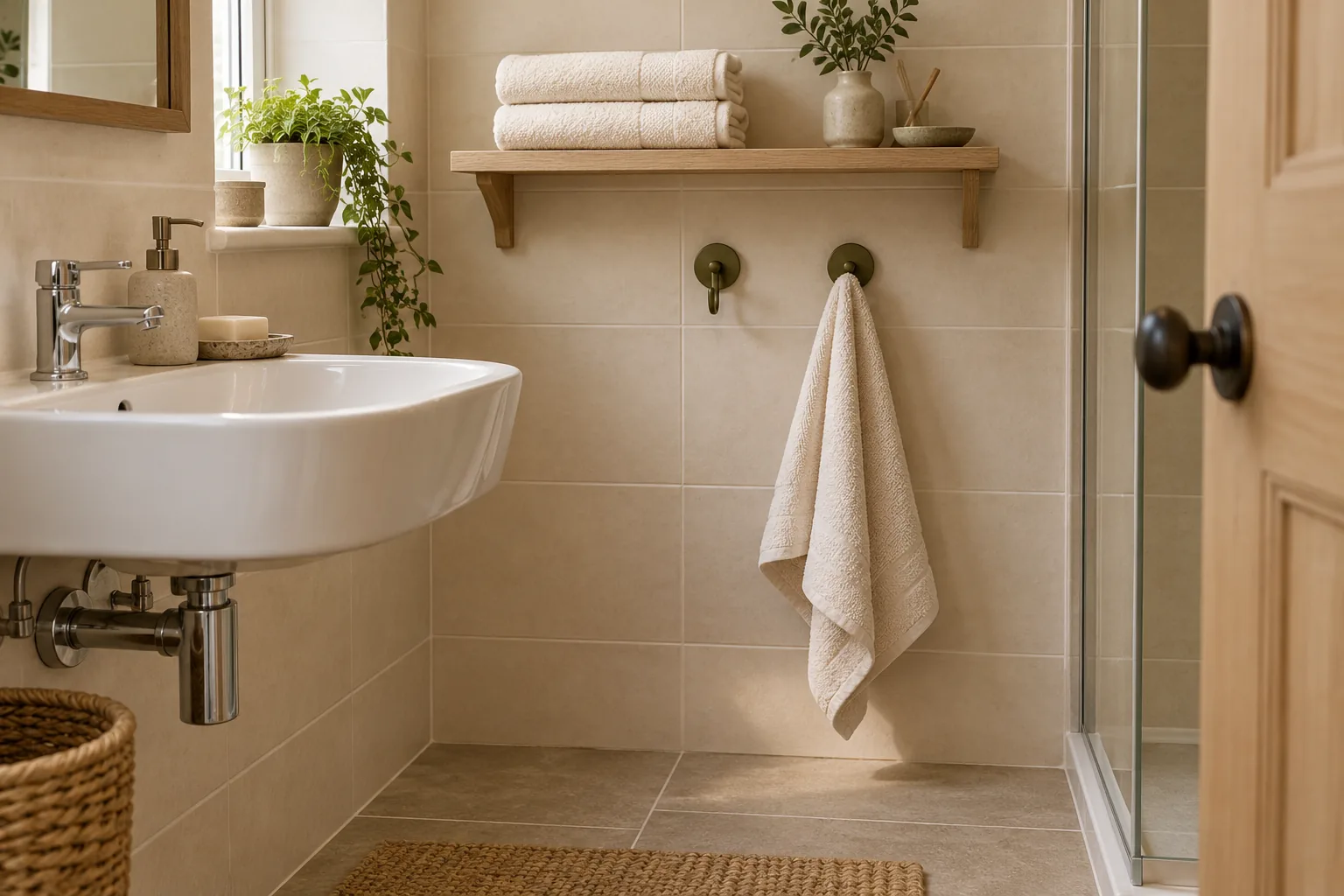
A rail lets you spread a towel out, whereas a hook gathers it into folds. Hooks are compact and convenient, but a tightly bundled towel may need rearranging to dry. Decide which option works with the available wall area and the way your household uses the room.
Do not assume that a ladder rail will hold a separate bath towel on every closely spaced bar without overlap. Hang the actual towels, or measure them, before deciding how much drying space the product provides.
Keep drying provision separate from clean storage. A damp towel folded into a lidded basket is not the same as a dry towel stored for later. Leave it out to dry appropriately before returning it to the clean stack.
Use a shelf for clean replacements
A shelf can work above an existing cabinet, in a dry recess or on a wall outside the main splash area. Place it where the contents can be reached without climbing on the toilet or the edge of the bath.
Check the folded towel’s depth against the usable shelf surface, including any brackets or lip. A shallow shelf may suit hand towels but leave large bath sheets projecting into the room. One folded stack can look calmer than several small containers holding the same amount.
IKEA’s bathroom-storage ideas include using overlooked space around doors. Treat high storage as an option for occasional items only where you can reach it safely and the fixing is suitable.
Check door-mounted storage with the door moving
An over-door hook can avoid using a free wall, but it still needs a trial. Confirm that the door closes properly and that the hook, towel and dressing gown do not hit another door, the shower screen or a person’s standing space.
Check the door manufacturer’s and hook supplier’s requirements. Do not add a fitting that prevents a fire door from closing correctly. If renting, confirm what alterations are permitted; removable does not always mean damage-free.
Place the towel where it can be reached without an awkward turn across a wet floor. If that is impossible, a wall rail beside the usable exit from the shower may be the better arrangement.
Make a basket earn its floor space
A basket can soften the appearance of a tiled bathroom and hold a modest clean supply. Keep it away from regular splashes, check that the material is suitable for the conditions, and leave enough space to clean beneath or move it easily.
Do not place it where it narrows the route between the door, basin and shower. A generous-looking basket that must be moved every time someone uses the toilet is probably in the wrong room.
If a basket is mainly concealing an oversized towel collection, edit the contents before replacing it with a larger one. Moving spares to a landing cupboard can free more useful space than another bathroom storage purchase.
A simple arrangement for a compact shared bathroom
Consider an illustrative two-person bathroom with little spare floor. Put a hand-towel rail beside the basin, provide separate reachable positions for the two in-use bath towels, and store a small clean replacement stack in an existing dry cabinet. Keep bulk linen elsewhere.
The exact rail sizes and positions depend on the towels, door swings and available wall. Test each towel at its full length. Make sure it does not trail on the floor, rest against the toilet or hang into the shower.
This arrangement keeps clean storage, daily use and laundry separate without requiring an additional floor-standing unit. If a proposed fitting blocks a necessary movement, change the position rather than asking everyone to work around it.
Keep ventilation part of the plan
More towel storage does not solve persistent dampness. Croydon Council’s condensation guidance advises using bathroom extraction during bathing and keeping ventilation functioning. Do not obstruct a fan, vent or window with a shelf or hanging towels.
If towels remain damp or you notice persistent condensation or mould, investigate the cause rather than enclosing everything in another cabinet. A broken extractor or leak needs attention; a different basket cannot correct it.
For the room beyond the towels, see our small-bathroom planning ideas and bathroom colour schemes. A practical storage arrangement leaves more room for the materials and details that make a compact bathroom feel welcoming.