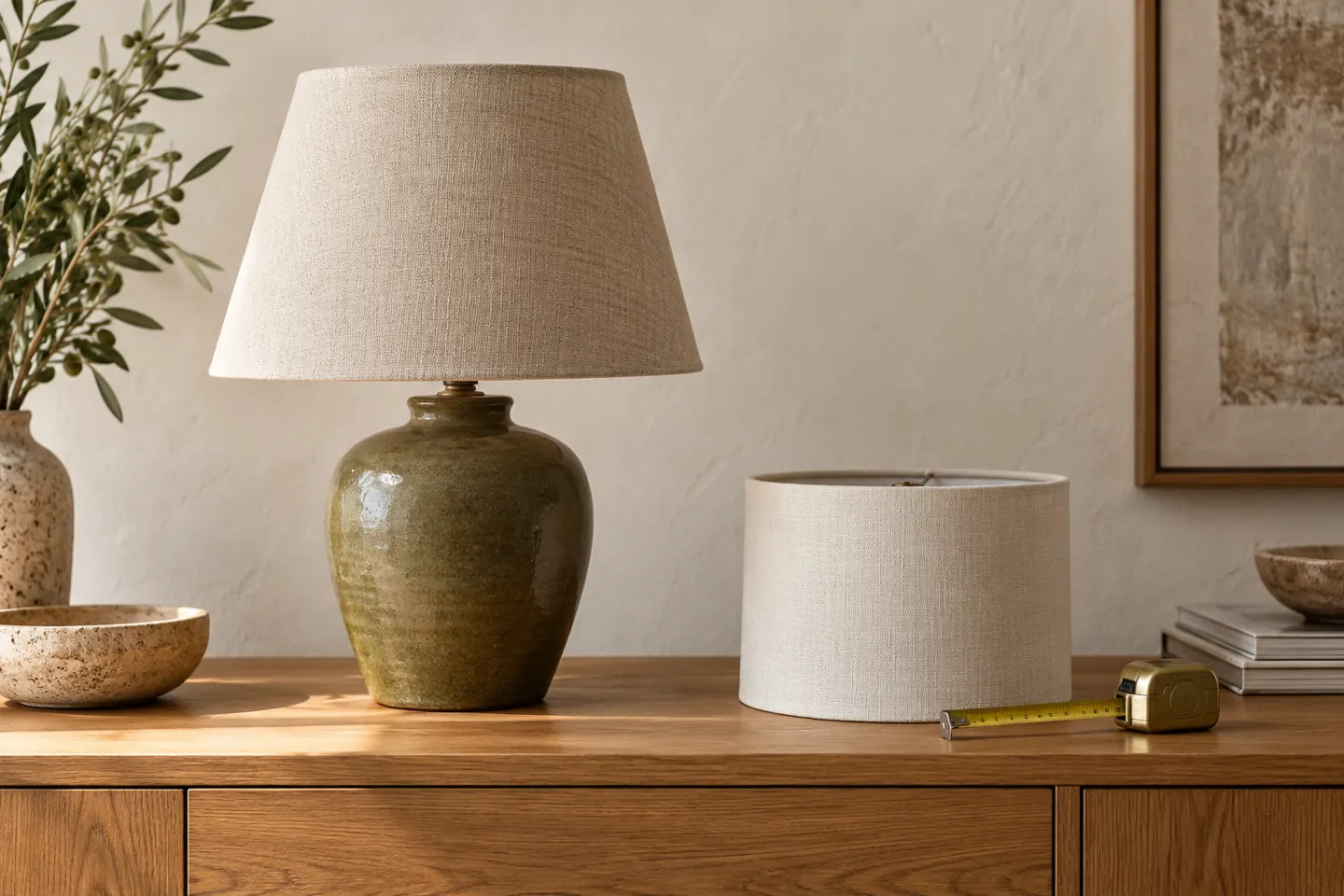
A new lampshade can change the character of a familiar lamp without changing the whole room. A broad linen shade may soften a corner; a neater drum can make the same base feel more contained. But the attractive combination in a shop still needs to fit your table, your lamp holder and the way you use the light.
Begin with the lamp in its intended position. Measure what you already own and decide whether the lamp is there for atmosphere, reading or both. Those answers are more useful than choosing a diameter from the product photograph alone.
Measure the base and the available space
Record the height of the base to the shade fitting, the base’s widest point and the size of the surface it sits on. Note nearby walls, shelves and furniture. A shade should have room to sit comfortably without becoming an obstacle beside the bed or sofa.
Pooky’s lampshade buying guide suggests a shade’s lower diameter close to the base-to-fitting height as an initial proportion check, adjusted for the base’s shape. Treat this as a starting point for looking, rather than a rule that overrides the actual lamp or its instructions.
Make a simple paper footprint for a proposed shade width and lay it on the table with the lamp switched off. Check what remains for a book, glass or bedside essentials. Do not put paper over a lamp or use a paper mock-up while the lamp is operating.
Read all the shade dimensions
A single size in a product name may not describe the whole shade. Pooky explains in its product and technical questions that its headline shade measurement is the bottom diameter, with height and top diameter listed separately. Check how your chosen seller defines each dimension.
Compare those measurements with the old shade if you have one. If the old arrangement felt too tall, changing only the width might not resolve it. Likewise, a shade of similar height but with a much narrower top can create a different silhouette.
Keep a photograph of the existing lamp straight on, with the whole base visible. It gives you a consistent reference when comparing options online. Avoid judging a replacement from a photograph taken from above, where a broad shade can dominate the base.
Use shape to answer the room’s needs
A drum has a relatively straight-sided profile; a tapered shade narrows towards the top. Neither belongs exclusively to one decorating style. Compare the outline with the base and surrounding furniture rather than assuming one is always modern and the other traditional.
For an imagined shallow bedside table, the main question might be whether the shade projects into the route beside the bed. On a broad sideboard, it might be whether the lamp looks lost beneath a large picture. These are different problems and may call for different proportions.
If you are still deciding on the wider palette, add the lamp, shade fabric and nearby finishes to an interior design moodboard. Keep the existing pieces in view so that the new shade connects with the room you have.
Look at the shade with the light on
Fabric colour in daylight is only half the decision. Ask to see the shade illuminated, ideally with information about the bulb being used. A photograph on a white background cannot show you exactly how the material will look in your evening room.
Think about the direction in which you need light. A lamp used while reading has a different job from one creating a gentle pool of light in a corner. Our guide to ambient, accent and task lighting can help you identify that job before you choose a decorative finish.
Check the view from your usual sitting position. Can you see an uncomfortable bright bulb, and does the light fall where you need it? A change of shade may help, but the base height and placement also matter. Test the complete arrangement rather than expecting fabric alone to solve glare.
Confirm the fitting before ordering
Check that the shade is intended for a table lamp and that its fitting is compatible with your lamp holder. Pooky notes that its standard non-pendant shades use a base-fitted gimbal; that is a detail of its range, not a universal description of every lampshade.
If the fitting is unclear, send the retailer the lamp’s model details and a photograph of the existing attachment. Follow the lamp and shade manufacturers’ requirements for bulb type, maximum rating and clearances. Switch off and unplug the lamp, and allow the bulb to cool, before changing the shade in accordance with its instructions.
Check construction as well as colour
Inspect seams, trim, the frame and the way the material sits. Our article on recognising a well-made lampshade looks at these details. Also check the seller’s cleaning guidance: a textured fabric you love needs a care routine you can manage.
The right shade works in daylight and after dark, fits securely and leaves the surface beneath it useful. Once those practical points are settled, colour and texture become enjoyable choices rather than expensive guesses.